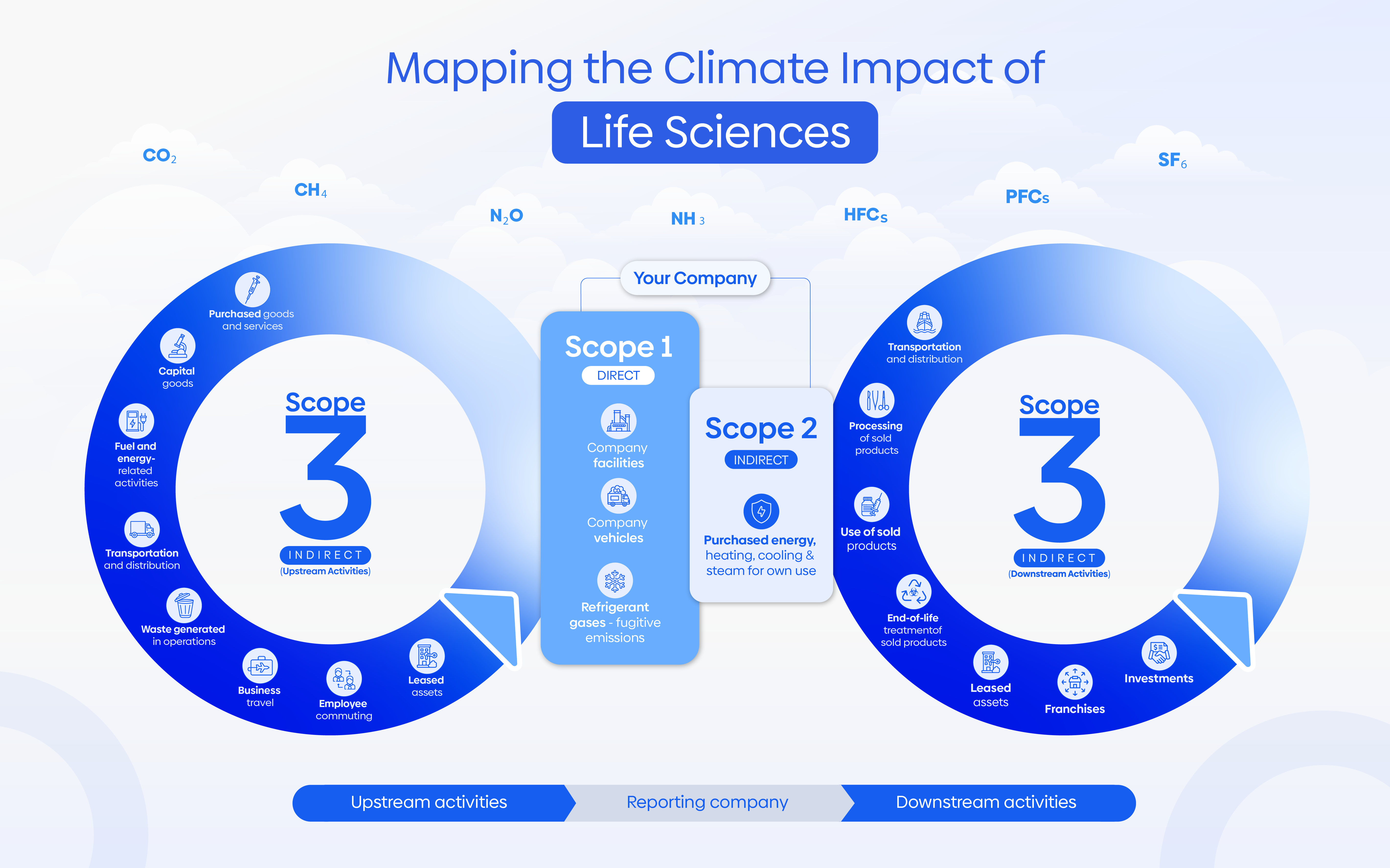
The NHS, recognized globally for healthcare excellence, ranks among the UK's largest public sector greenhouse gas emitters due to energy consumption and medical waste. Committed to achieving net zero by 2040 for direct emissions and 2045 for indirect emissions, the NHS continues strengthening supply chain expectations. The supply chain generates over 60% of the organization's carbon footprint.
Starting April 2027, the NHS Net Zero Supplier Roadmap mandates that all suppliers must "publicly report targets, disclose their full greenhouse gas emissions, and publish a comprehensive Carbon Reduction Plan (CRP)" covering all global scope 1, 2, and 3 emissions.
What is Changing?
Full Scope 1, 2, and 3 Reporting
Previously, NHS contract bidders only reported operational emissions plus five scope 3 categories. Now suppliers must measure all material scope 3 categories including purchased goods, capital goods, fuel, product processing, end-of-life treatment, and leased assets.
Carbon Reduction Plans Covering Global Operations
Plans must include forward-looking reduction strategies, organization-wide actions across all operations, and alignment with NHS timelines.
Why This Matters
The expanded requirements ensure consistency, data reliability, accountability, and transparent decision-making across the supplier base.
The Business Case for Suppliers
- Access to NHS markets requires compliance
- Early adopters gain competitive advantages
- Carbon measurement reveals cost-saving opportunities
- Public reporting enhances credibility and ESG transparency
Preparing for 2027
Suppliers should establish complete emissions baselines, implement data collection processes, set science-aligned targets, develop carbon reduction plans, publish findings publicly, and integrate carbon considerations into operations.
Looking Ahead
The NHS framework influences international healthcare procurement standards, positioning early-adopting suppliers favorably in emerging global markets.